Marketing, Design, Productivity & Business Administration
We now live in a creator economy with grassroots and grasstops political advocacy where swing voters are influenced with AI. For creator marketing, I like Pearpop and Breakr. For musical artist management, I like Sentric -> Distrokid -> Terrorbird -> AWAL. For the nuts and bolts of running thrifty companies on a budget, Patriot Payroll, Thatch for Individual Coverage Health Reimbursement Arrangement (ICHRA) benefits management, Horilla for human resources management (HRM) for it's support of Andrew Grove's objectives and key results (OKRs) which John Doerr expands upon here, Remofirst for international HR employer of record (EOR) services, Weblate for internationalization/language translation done by professionals, Taiga.io for project management, Penpot.io for designing application prototypes, Twenty for customer relationship management (CRM), Swetrix for web analytics, Tracardi for customer segmentation, Activepieces for marketing automation (Node-RED is truly FOSS [Richard Stallman is an extreme treasure], but Activepieces is more convenient), ListMonk for newsletters, transactional emails and Fonoster-based SMS, Documenso for e-signatures, Papermark for document sharing/data/deal rooms, Docmost for team wikis with live collaboration, NextCloud for team file storage and office software, and Odoo for enterprise resource planning (ERP) back-office tasks like accounting and expense management that the other tools are not capable of.
For archiving, traditional banker’s boxes are not suitable. I prefer 100% cotton paper printed by the Canon GX4020 with pigment ink (refilling ink tank printers is more affordable than replacing ink cartridges), stored in acid and lignin-free boxes and folders. For sustainable copy paper I prefer sugarcane fiber. ULINE, Southworth, and BAZIC Products are great. I trust Iron Mountain for offsite archiving.
Private Cloud Work
- Developing
Strata, a declarative cloud provisioning tool with Cluster API pivot automation functionality. Inspired by the question, "what if a computer worm could provision a cloud?" I've been trying to get Google Gemini to code it and right now the repository is a little messy. I will see if I can keep Gemini disciplined withStrictDocfor requirements management andOpenVikingfor organizing context. If I end up bringing it to web with a graphical user interface (GUI), I would useQwikfor its phenomenal Google Lighthouse scores.Fluttersounded great for native applications, but I've found its functionality lacking for my projects.Tauriprovides native mobile and desktop support to Qwik apps by linking native APIs to webviews (I like the looks ofServoas a browser engine, but its compatibility and stability needs to improve before I can use it). Inspired by Spotify, I'm also interested in usingVite's module federation for micro-frontend development. Cloudflareis great for web domain registration, denial of service attack protection, and tunneling private networks to the public. This website showcases its free web hosting capability.- Building a distributed private cloud with full disk encryption and remote attestation to protect from BootKit malware (using
Kubernetes,Flatcar Container Linux,Clevis [TPM & Tang], andKeylime). I am interested in using hardware security modules (HSMs) andPKCS#11to wrap data encryption keys (DEKs) with key encryption keys (KEKs) and store them in a remote key management system (KMIP). I've thought about usingKeplerandSonoff S31smart plugs (industrial control systems are expensive and unncessarily complicated for small data centers. I've got two smallCyberPower CP1500PFCLCDuninterruptible power supplies (UPS) that attempt to protect my computers from power surges and brownouts by regulating the voltage of the electricity supplied to them. I was careful to choose a UPS model that can be programmed withNetwork UPS Toolsand theTripp Lite SRCOOL12KEair conditioner is on my wishlist for when I build a rack for my servers. Smart plugs are modular IoT edge infrastructure that can be secured on an air gapped network and isolated in a VLAN [I likeSONiCfor switches andVyOSis okay for routers (I'm thankful for their charitability in open sourcing their rolling release and understand the monetization of their work with their commercial long-term support (LTS) release. I interpret their product to be mostly a very convenient configuration layer that sews together underlying FOSS tools such asFRR,VPP,strongSwan,HAProxy, etc.)]. The smart plugs supportRedfishand can be used withMediK8sfor automatic node remediation [like if the computers' operating systems gets stuck and can't shutdown, the smart plug can be programmed to turn off and on the power to fix it]) with Tasmota firmware (the screws always strip. Being careful with a drill jig and a small bit worked for me. I didn't bother to solder I just used test leads like this video) to monitor energy consumption and compute cycles (what % of the power bill is used by what % of the smart plug is used by what % of the compute cycles?) like miles on a car to itemize tax deductions. - I've been looking into
Ceph(Rook) for its multi-site, geographically redundant, high availablility (HA), learning about RADOS gateway S3 data bucket lifecycle policies for automating data migration between hot/warm/cold tiers based on usage. - Planning a monolithic repository for applications with static code analysis tooling (using
Git[Scalar,Large File Storage (LFS),ForgejoandCodeberg],Opengrep). - Architecting CI/CD pipelines capable of monorepo scale (using
Nix,Bazel, andArgo). - Creating containers with minimal attack surfaces, scanning them for vulnerabilities, signing them, and hosting them in a private repository (using
Podman,Canonical Rockcraft,Trivy,Sigstore Cosign, andArtifact Hub). - Securing my cloud (using
Wazuh SIEM/XDR,Suricata, andClamAVwith additionalYARArules for ring 3/userland protection. StudyingTetragonpolicies for ring 0/kernel. Fun fact: the ring paradigm comes fromMultics). I want a micro-cut shredder (even though fire is better) and theProton 1100 degaussing wand. It seems like affordable entrypoint to the realm of degaussing. I would still useShredOSbefore waving the wand, though. - I'm amazed at what consumer hardware is capable of. eBay is great for cheap enterprise hardware. Not everybody needs the latest and greatest. Smart people, like NASA's Apollo 13 mission crew and ground support, or Matt Damon’s characters in The Martian and Good Will Hunting, flourish despite resource constraints. The privacy and security risk of leaking trade secrets and sensitive information to public AI models is concerning. Houston, we have a problem.
Activities
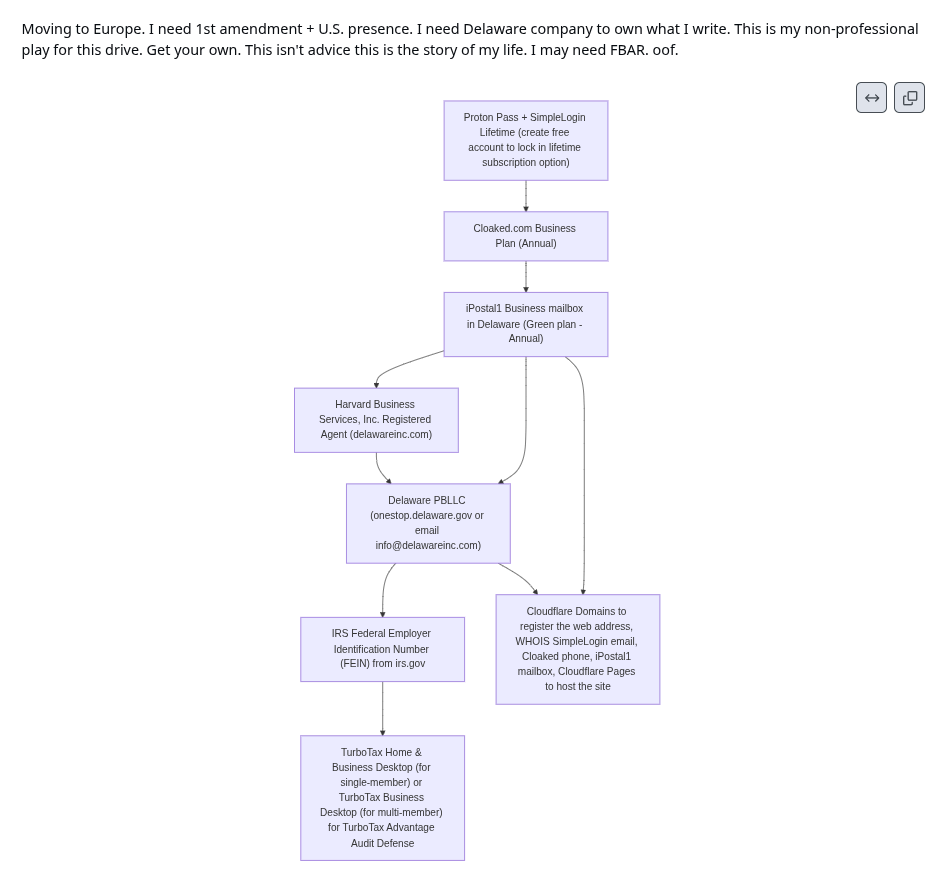
I am an advocate for the democratic republic model of state governance, free market capitalism (Feeding America's market for food banks proves Ronald Coase's rebuke of Vladimir Lenin's one single factory in The Nature of the Firm), accessible education, and collective narrative infrastructure. I'm saving up for a Chatham House membership for their eLibrary and a Philanthropy.com membership for GrantStation. For risk management, OpenRiskManual.org is useful to reference. For privacy, I recommend Proton Pass & SimpleLogin (I created a free Proton account then purchased a lifetime subscription), Cloaked.com is great, I hate credit cards so I use Privacy.com to protect my debit card numbers, and iPostal1 to shield my address from merchants. I ship to Mr. W, but I am considering fluidly using Mx. W to protect the personally identifiable information that is my identity.
Prediction markets try to quantize and inference what the future will be (like predicting which politician will win, what their policy will be, what the downstream effects on the economy will be). I believe it's impossible for us to be absolutely confident of what will happen (even with illegal market manipulation and insider trading, I think nothing is for certain. Jesse Livermore is a good example of the perils of trusting insiders), so we use statistics and probilistic models. Free markets try to democratize the calculation of risk. What the markets think is not always true. We’ve seen it with financial crashes time and time again. Way back. New technology brings new risk. Enron was conscientious exploitation at the forefront of digital computing, and Knight Capital was poor system design. Black box artificial intelligence models often produce errors. I encourage using tractable probabilistic models for explainability in all industries. If a mistake is made it needs an explanation not a shrug and excuse. I also encourage the use of compressed sub-quadratic models for efficiency to keep the cost of hardware and consequential resource consumption from ballooning (multiplying exponentially).
Inspired by Renaissance Technologies, I plan to sit for the Series 65 exam for investment advisers, and I have been studying to write quantitative financial algorithms. Inspired by the University of Cambridge Centre for Business Research paper Shareholder Value or Public Purpose? From John Maynard Keynes and Adolf Berle to the Modern Debate by Suzanne Konzelmann, Victoria Chick, and Marc Fovargue-Davies, I strive to incorporate and invest in equitable, employee owned, public benefit entities (PBLP/PBLLC/PBCs) with measurable purpose statements and triple bottom line accounting (I'm studying Edward Elgar’s Research Handbook on the topic by Sabri Boubaker, Douglas Cumming, and Duc Khuong Nguyen. I have had good experiences with Harvard Business Services, Inc., and I read they can assist with the formation of the public benefit entities, however currently their website does not have the option to create public benefit entities online. I may call +1(800)345-2677 ext 6900 or email info@delawareinc.com. After reading The “Value” of a Public Benefit Corporation by Jill E. Fisch & Steven Davidoff Solomon, I condemn vague and abstract purpose statements that do little but argue against the fiduciary duty of executives to shareholders. Thank you Ken Adams for criticizing abstract nouns. His book A Manual of Style for Contract Drafting is excellent. I like the flexibility to redline and negotiate agreements with private credit and boutique banks. I condemn private equity firms that loan-to-own their way to cutting pension. Vulture funds give the industry an evil reputation, but not every merger or acquisition is a hostile takeover. I condemn the abuse of patent offices with unnecessarily complicated patent thickets. To navigate these thickets, I found the law review articles Into the Woods by Jeffrey Wu & Claire Wan-Chiung Cheng, Anna Zhou's In the Thick(et) of It, and Emily Samra's The Business of Defense: Defense-Side Litigation Financing informative. I wish for the American adoption of Global Reporting Initiative (GRI) standards for measuring management, or at least an alternative that gets the gist of "pollution is bad". I disagree with restrictions on advisers preventing them from factoring in anthropogenic environmental risk and non-shareholding stakeholders. If we continue to chase profit over everything else, this planet should be renamed Gomorrah.
I personally like the looks of Interactive Brokers for international securities, Charles Schwab for payment-for-order-flow routing, Lightspeed brokerage for co-location near exchanges (quantum clocks and the Open Compute Project’s Time Appliance [I call it the chronomeister] are of interest for near real-time clock syncronization [genuine real-time signal processing is impossible. We cannot communicate signals instantaneously there is always some latency as the information travels. From what I understand, even quantum teleportation is limited by the speed of the light and thus has latency], though a Freedom to Operate [FTO] analysis is applicable as I don't want to infringe on RenTec's patent), Wedbush Securities clearing and settlement (I wish the industry would speed up the adoption of same-day settlements), and Bank of New York for custody. Investors’ Exchange (IEX) and their speed bump is also interesting because Ultra Ethernet network interface cards, EDSFF data storage, and custom application specific integrated circuits (ASICs) are expensive. Dark pools are misunderstood and conspiracy theories emerge from a lack of knowledge. They help market makers (who provide liquidity to public markets so that, when we go to trade securities, our orders are filled by populated order books [I wish L3 data was more accessible and affordable — especially for open market surveillance purposes (especially as algorithmic collusion in trading has emerged as a problem)] with optimal bid-ask spreads for efficient markets [meaning that there are buyers (bidders) that agree on the price set by sellers (askers)]. Dark pools help protect public markets from volatility (like flash crashes) by competing outside of public exchanges in alternative trading systems. I believe that dark pools are a whole different league than retail markets, and that it would be irresponsible for a retail investor to try to compete in them. OpenSanctions & fuzzy name matching, Plaid (KYC for investors), and Middesk (KYB for investments) are essential. On the matter of securities offerings, I am curious about Reg D for accredited investors (Nasdaq Private Market and Forge Global bring liquidity to private markets, but a lot of the companies I am interested in aren't on those alternative trading systems. Venture capital has access to more deals as unknown founders pitch to them [the tech industry venture capitalists use the term "pitch deck" and I think the mainstream financial industry uses "pitch book"]) to Reg A (with Tier 2's audits, I trust securities offerings to unaccredited investors) to SPAC/Form S-1 initial public offering (IPO). I have reservations about Reg CF offerings. There are good crowdfunding campaigns and then there are evil ones. I'm reminded of the tree of knowledge of good and evil. Midsize Public Company Accounting Oversight Board (PCAOB)-registered financial auditors like Citrin Cooperman, EisnerAmper, CohnReznick seem to align with my frugality. The Big Four aren’t for everybody.
Information Technology Proficiencies & Passions
Ubuntu and Debian, Arch Linux, Flatcar Container Linux, I rely on TPM2.0, but I’m interested in OpenTitan and RISC-V Silicon Root of Trust chips, I’m excited about the CHERI Alliance for confidential computing secure enclaves, SQL and Postgres, Kubernetes (I prefer k0s over kubeadm, Metal3 over Tinkerbell (Cluster API), CRI-O over containerd, crun over runc, Podman over Docker, Canonical Rockcraft or Red Hat UBI over Wolfi over Alpine. I like Kata Containers and CoCo confidential containers, Cilium/Hubble/Tetragon, Trivy, Notary, and Harbor), OpenStack Barbican, KeyCloak, EJBCA (certificate authority), KubeVirt, Zero Trust Networking & Wireguard (I prefer NetBird for NAT traversal on residential networks lacking port forwarding capability), Nix, Argo, Just & Bazel (BuildFarm enables distributed builds that Buck, cmake, and ninja lack).
Programming
DJ Dave showcases the power of strudel. The programming language I use varies depending on the software I develop, I write polyglot software. It's a lot easier now with AI. I use Go for platform engineering, Python for data science (I prefer Julia, but it is limited to CUDA), I prefer Elixir for writing APIs, and TypeScript a must for Qwik.
Sometimes I think too hard and believe I need to design application specific integrated circuits (ASICs) and write memory safe applications in Ada. Ada’s a little slow but it’s safe. Rust isn’t as safe, but it’s faster. Bjarne Stroustrup’s introduction of concepts to C++ is cool, but C++ is like bowling with the gutters down. 3D integrated circuits are the future, AI is needed to design them. Proprietary software is too expensive for me. The closest open source equivalents are not as good, but China is closing the gap in both design and fabrication tooling. ASML lithography machines are still the best, and there’s only a couple fabs in the world that can afford them. The licenses for proprietary instruction set architectures (ISA) are also too expensive for me. I love RISC-V’s free and open source nature. It’s backed by the Linux Foundation. It recently got mainline GPU support, but it’s not as featureful as x86-64/ARM. I wish for Sylkan to remove the Rusticl-on-Zink translation and go straight to Vulkan. NVIDIA’s CUDA programming language is more featureful than AMD’s ROCm and OneAPI (CUDA had accelerated vector search when I needed it whereas AMD and Intel did not). I personally prefer AdaptiveCpp for its heterogenous hardware support, though it still has work to do in order to catch up to CUDA. I switch hardware around and I don’t like to rewrite code. I like what I see out of the Berkeley Architecture Research Lab — specifically Chisel (based on Scala which I prefer for data engineering). VHDL is a little outdated. Chisel compiles down to Verilog.
Experience
TooCuteTreats.com — A dog treat company.
Currently resigned due to confusion about the mandatory conscription of Croatian citizens into military service in response to Vladimir Putin's atrocious mobilization of the Russian military for war on Ukraine and incursions into Europe. For religious, moral, and medical reasons I conscientiously object to military service. Calling what my friends call the Apocrypha the Deuterocanonical books for 2 Maccabees, I pray for the dying and the dead and to Basil of Caesarea for peaceful diplomacy between Croatia and Serbia. I condemn the Ustaše.
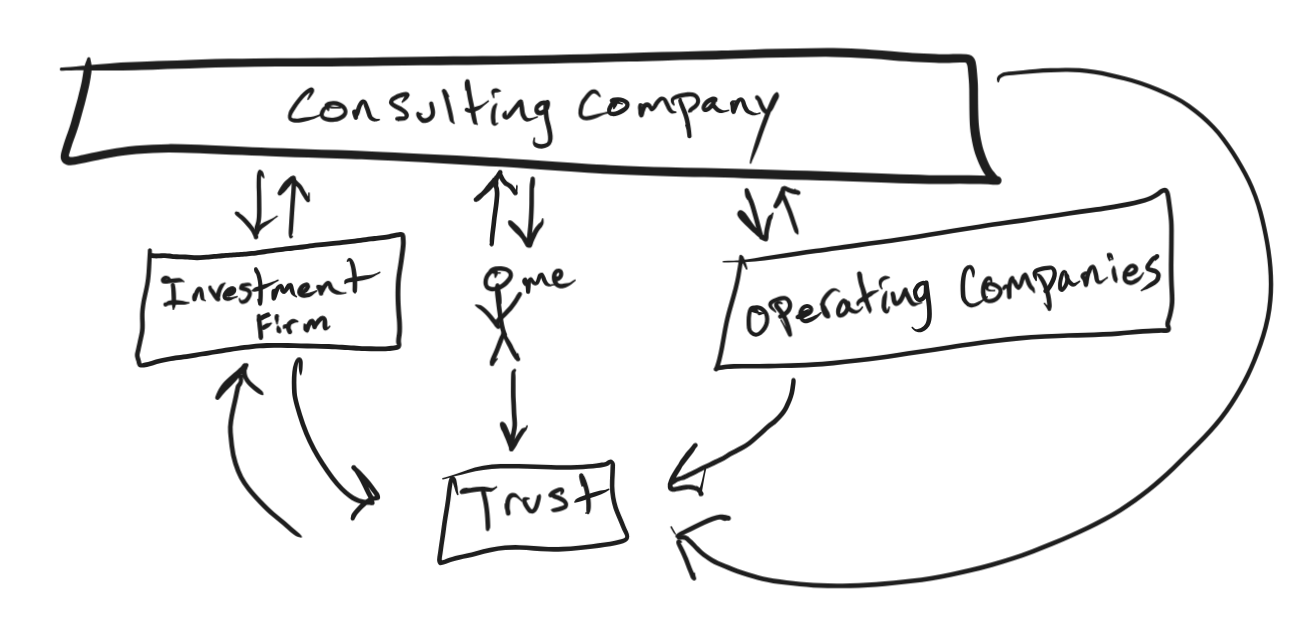
I am open to civil service and the European private sector. I plan on incorporating a multi-national consulting firm so that I can continue to advise my Co-Founder grow the company while I am overseas. Practicing the intercession of saints I invoked Francis of Assisi for his patronage of animals, and I have thoroughly enjoyed making dog treats.
Education
Southern New Hampshire University (SNHU)
For geospatial data processing, I love Cloud-Optimized Geospatial Formats and I have found Development Seed's zine to be very educational. Concerning the environmental footprint of AI, I trust this article funded by the Tarbell Center for AI Journalism. I wrote these words on the matter some time ago: Most data centers are inefficient. They consume massive amounts of energy and water, straining our resources. I’ve found some developing solutions we may see soon:
As a preface, energy powers data centers, generating that energy often consumes water, and water is also used to cool data centers.
Compute & Storage: Use efficient processors and storage. Instead of computationally expensive systolic-array-based AI accelerators, neuromorphic processing is far more efficient. Similarly, ditch power-hungry, heat-spewing hard drives for SSDs—especially EDSFF form factors, which offer higher storage density in a smaller footprint, cutting energy use and cooling needs. An aside: magnetic tape is still needed for archiving cold data. Even CERN still uses tape. Hard drives and SSDs can only retain data for a couple years. LTO tapes, when stored upright at a steady temperature between 60°F and 77°F (15°C - 25°C) and relative humidity (RH) between 20% and 50% can last decades. Large fluctuations are more damaging than a steady, slightly sub-optimal temperature.
Cooling: Build data centers in colder climates, and adopt efficient cooling technologies. Two-phase immersion cooling fascinates me. It’s wild to see expensive computers submerged in what looks like water, but it’s actually a non-conductive (dielectric) refrigerant. Submerged in a reservoir, the computers heat up, the refrigerant boils and evaporates, the gas cools on a condenser back into a liquid, then returns to the reservoir. Some older refrigerants were per- and polyfluoroalkyl substances (PFAS) which are terrible for the environment, but regulations spurred safer and more sustainable alternatives like hydrofluoroolefins (HFOs). These still contain fluorine, but fluorine is found in most modern refrigerants due to having chemical properties that are generally well suited for transferring heat. The European Union’s push (Regulation (EU) 2024/573) to phase out hydrofluorocarbons (HFCs) by 2050 worried me. Though, HFOs are not included in the EU’s phase-out initiative, nor the EU PFAS Restriction Proposal (REACH). Instead, controls are introduced based on global warming potential (GWP) thresholds, and thankfully HFOs have a low GWP.
Energy: Hot take: some molten salt reactors (MSRs) don’t need water for cooling and can deliver the energy exascale data centers demand. It’s nuclear, but when done right, it is safe and pretty clean. If you’re anti-uranium, thorium is an excellent alternative that thrives in MSRs. Either way, the fuel can be recycled to reduce nuclear waste buildup: about 96% of uranium fuel is recyclable, and thorium fuel offers even greater recyclability, with nearly all of it being reusable.
Beyond this, software should be efficient, and waste heat from data centers should be repurposed. While heat pipes efficiently transfer heat over short to moderate distances, they are not ideal for long-range transfer. Given this, a viable option for repurposing waste heat is to supply warmth to nearby buildings including ancillary facilities on the data center campus and local communities. Other options exist, but using heat for warmth makes sense to me.
Learning & Exploration
CISO Assistant, Prowler, VerifyWise, PyTorch/AI & continual multi-agent reinforcement learning, OpenAI Triton (I wish SYCL was more popular), Ray.io, MLflow, FerretDB, Valkey, NebulaGraph, Milvus, Prometheus/Thanos, Grafana, Apache Cassandra, Kafka, Flink, Spark, Airflow, Superset, Hudi, Presto, Velero, Kubewarden, OpenTelemetry, Genode & seL4.
I am concerned with the cybersecurity infrastructure I see and advocate for trust and accountability. Hyperledger Fabric and Chaincode seem to be useful for securing supply chains with immutable chains of custody.
Certifications & Honors
- Microsoft Certified Azure Fundamentals (AZ-900) - 2024
- National Society of Leadership and Success (Alpha Sigma Pi) - Member, 2023
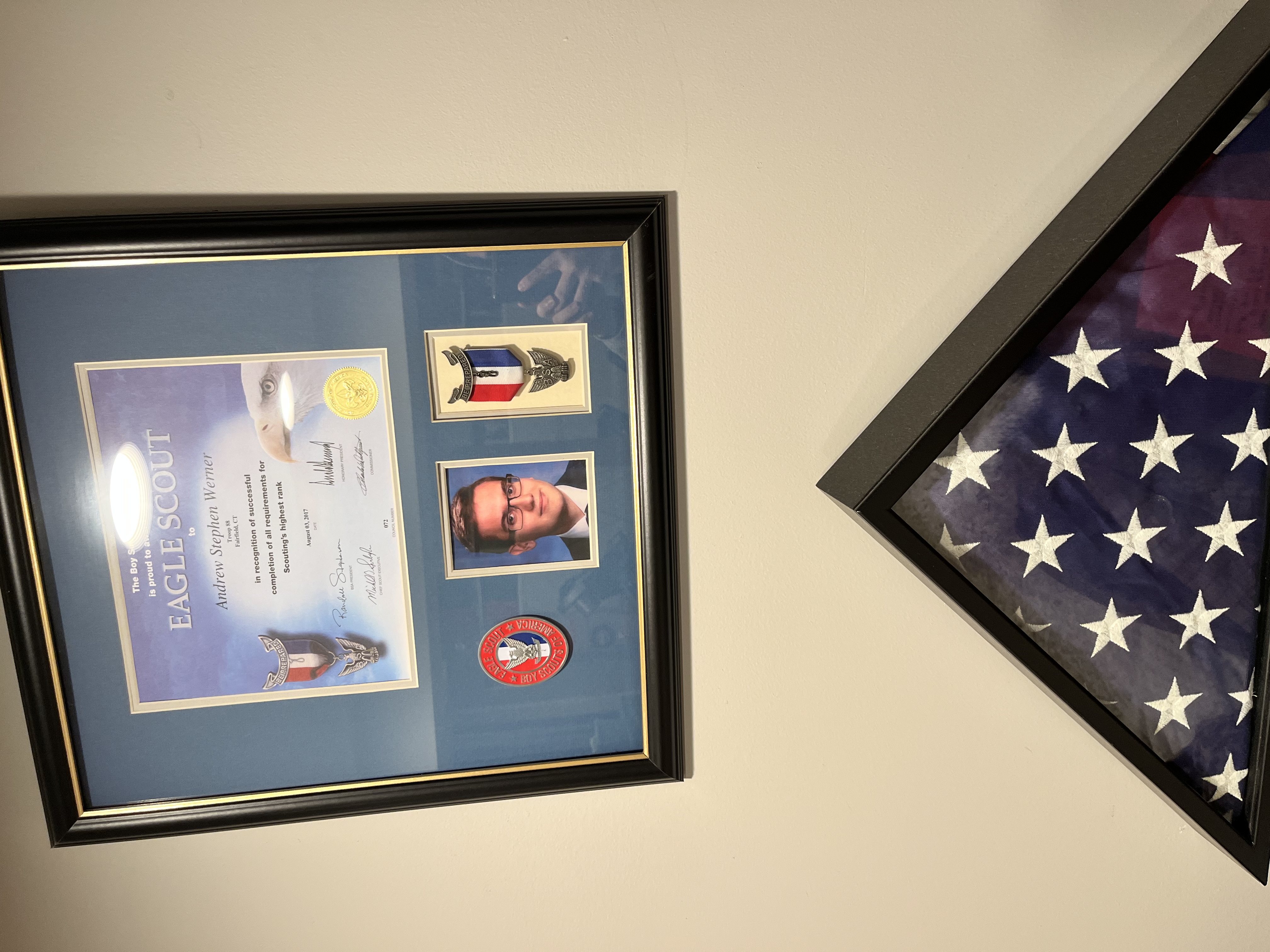
- Scouting America - Eagle Scout, 2017
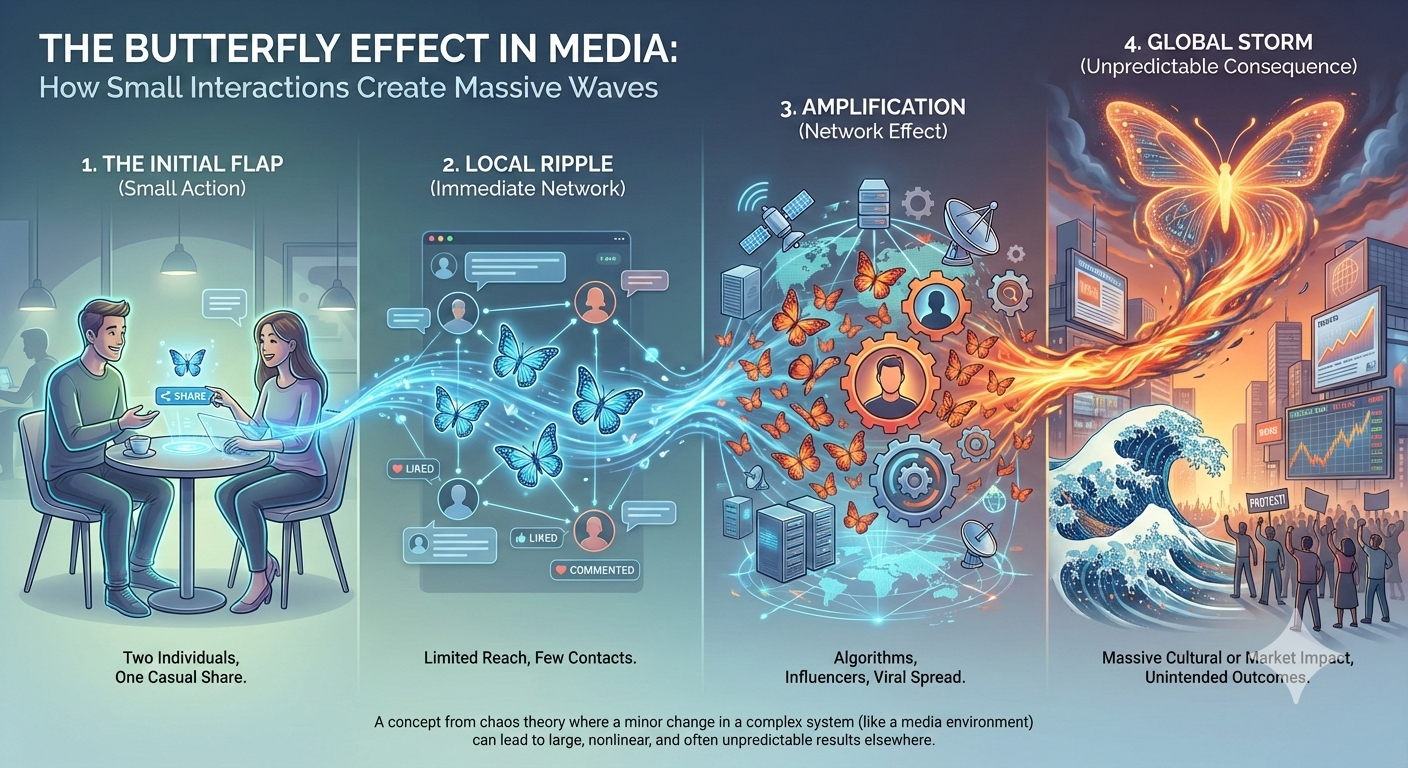
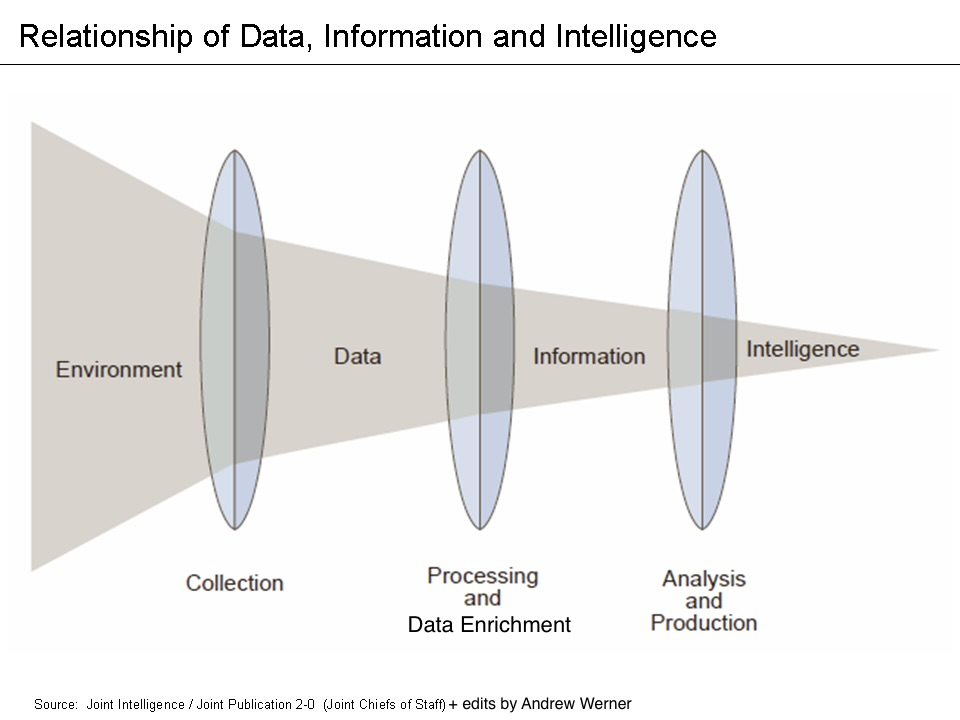
I edited the intelligence cycle graphic from Wikipedia and generated this butterfly effect graphic with Google Gemini (I'm shocked at the throughline of weather science between Lewis Fry Richardson, John von Neumann, and Edward Lorenz). We share the same environment and intelligentsia. We do some work and talk about it, sometimes publish it. It stays disparate until someone or some algorithms string it together. I follow my curiosity trying to make sense of it all as I live my life and surf the web. I try to avoid secrets, but sometimes they matter. Attempting to dispel some of the apophenia and theories I confess I have been wound up in (I'm confused why the U.S. military is disclosing Chinese flying saucers? Is it true 🤔?), I think The Bilderberg Conference is nothing more than a selective group of western leaders that talk about macroeconomics and the transatlantic West under the Chatham House Rule which means what is talked about can be shared, but who said it must be kept secret (Chatham House is a British invention that is open to membership applications from the public, and the Council of Foreign Relations is American and invite only. I haven't been invited. I read Foreign Affairs magazine and think the Chatham House eLibrary is better. I think the Atlantic Council tries to bridge the international relations community across the Atlatic Ocean. Humanity is still growing into the shoes of a globalized internet). The differences between the Basel Accords and is metaphysical grounding for timely dialogue. I am personally concerned about the weaponization of academic research. Cure cancer? Duh, go for it! Precision oncology research and cancer vaccines could help us all. At the same time, I have concerns. I condemn complete freedom and anarchy. For some industries, there should only be a front door.
Innovation is creatively destructive. Small businesses can disrupt monopolies with intelligence. I have been educated by the stories of François Xavier d'Entrecolles’s exposing of the secret of fine china (porcelain) and Pierre Poivre’s ending of the Dutch East India Company (the world’s first corporation and inventor of the stock exchange)’s Banda Islands. The French School of Economic Warfare and this article on the Jeune École is interesting. Competitive intelligence and Michael Porter's teachings on strategy seem particularly useful for setting prices (Quanta Magazine explains the game theory of algorithmic collusion well). Having read about strategic lawsuits against public participation lawsuits, I am concerned about the American Rule of legal fee shifting. It's unfair what people with lots of resources can do to people on the come up. It’s asymmetrical lawfare. The Transnational Litigation Blog has me wary of forum selection and international arbitration clauses.
I wonder about the French school's elicitation techniques. I know they won't bring me to a blacksite and torture me, the French signed the Treaty of Rome. I wish to visit the Skull of Mary Magdalene.
A Prayer for Our Environment from Pope Francis’ Laudato Si’
All-powerful God, you are present in the whole universe and in the smallest of your creatures.
You embrace with your tenderness all that exists.
Pour out upon us the power of your love,
that we may protect life and beauty.
Fill us with peace, that we may live
as brothers and sisters, harming no one.
O God of the poor,
help us to rescue the abandoned and forgotten of this earth, so precious in your eyes.
Bring healing to our lives,
that we may protect the world and not prey on it,
that we may sow beauty, not pollution and destruction.
Touch the hearts of those who look only for gain
at the expense of the poor and the earth.
Teach us to discover the worth of each thing,
to be filled with awe and contemplation,
to recognize that we are profoundly united
with every creature as we journey towards your infinite light.
We thank you for being with us each day.
Encourage us, we pray, in our struggle
for justice, love and peace.
We are all connected in this environment. Butterfly effects emerge from our anthropogenic activities. I think about Ubuntu's "I am because we are" and the importance of collaboration moreso than great people. Lone geniuses look mad.
In the complexity of our relations is where my faith, hope, love, and charity emerges.
The history of the Aramaic word "Ephphatha" ("be opened") spoken by Jesus to a deaf man (Mark 7:34), His parable of the Grain of Wheat, The Bible moralisée, and The Book of Divine Works are powerful.
I like liberation theology and believe in the Immaculate Heart and Immaculate Conception of Our Lady of Guadalupe (Mary, mother of Jesus — her Basilica in Mexico is glorious). I am interested in Justin Martyr’s Logos Spermatikos. I believe that only God knows everything (omniscience). Disagreeing with Pelagius, I believe in the original sin and the Fall. Inspired by Pope John Paul II’s call to breathe both the Western and Eastern churches as one set of lungs, and Pope Leo XIV's call for full communion with the Orthodox Church (Pontifex means "bridge-builder" in Latin. From my limited understanding, when Jesus gave his disciple Simon a new title to signify his role as the foundational rock of the early church, he called him Kepha [כיפא] (John 1:42) [it wasn't until the Tyndale Bible that it was written in English]. In Aramaic, Kepha [כיפא] means "rock" or "stone". When the New Testament was written and translated into Greek [the Septuagint is the Greek translation of the Old Testament which predates the Masoretic Text of the Tanach (I got that spelling from ArtScroll)], the Aramaic Kepha had to be adapted. Petra (πέτρα) is the literal Greek translation of the word, meaning a large, solid rock or bedrock. Petra is a feminine noun in Greek, and so it wasn't suitable as a name for a man. To give the name a masculine ending, the Greek text used Petros (Πέτρος), which became "Peter" in English. I personally believe in the Apostolic Succession of the Bishop of Rome, the pope, despite the pornocracy. Even the pope experiences concupiscence, even he sins, papal infallibility is conditional. Only what is said ex cathedra is infallible. There have been genuine antipopes, and I affirm Vatican II and believe that the Chair of Saint Peter is not vacant. I love my sedevacantist neighbors. Peace in difference, but with bridges. I admit I don't know much about the Patriarchs beyond the "first among equals" of the Ecumenical Patriarch of Constantinople), I am reading Anna M. Silvas’s translation of The Rule of St. Basil in Latin and English. I affirm the Holy Trinity, the Act of Contrition, Apostles’ Creed, and the Nicene Creed believing that the Holy Spirit proceeds from both The Father, and from the Son.
The closest Jesus came to violence was furnishing a whip that He did not use on a person (John 2:15). For that, I disagree with John Brown's violence even though his fight against slavery was very honorable. We are humans, not property. We were told by Jesus to love ourselves and our neighbors. Love should never feel like slavery.
I get wary of mass surveillance, but I think of the heuristic that God is always recording. The Holy See sees some things, but not everything. Only He has total information awareness. To paint a picture, 🎭👨🎨🖼️, in this world, His perfectly symmetrical divine light, the Logos, refracts through a prism (I think the prism is the Fall) like Isaac Newton's Opticks that creates a rainbow of asymmetrical quantum information that is our world. I sense a parallel in the symmetry and subsequent asymmetry of baryogengesis. The phrase creation "unfolding" and the unfurling of a flower's petals comes to mind, with our love emerging in the complexity of it all. I may know one subject matter, red, and you may know another, blue, green, any hermeneutic, any belief, any color. We navigate the rainbow of information with limited perspective/aspect (e.g. mind-body dual aspect or mind-body-soul triple aspect). Jesus came with infinity aspect and gave us the gospel and we are trying to interpret His teachings as He intended.
Examining the etymology of the words Roman Catholic, I am part of the laity of the Roman rite of the Universal Church — The word “catholic” is Latin for “universal”, and we all share one Christ who really did exist and work miracles. With personal piety, in the pluralism of the United States' first amendment to the constitution, I affirm Eun-Sil Son’s work Sola fide or fide caritate formata: Two incompatible principles? From Martin Luther to Thomas Aquinas as a metaphysical bridge between my Lutheran ❀ friends' sola fide (justification through “faith alone”) and the Roman Catholic “fide caritate formata” (justification through faith formed by love), as through faith alone (the faith of those who nurture us), we receive the sacrament of baptism (I was baptized in the suburbs of Houston, Texas) and through our grafted branches onto Jesus’ vine (Romans 11:17), love flows from His Sacred Heart and shapes us to be virtuous.
Contemplating modern social arguments with liberation theology, specifically social ontology and phenomenology of gender and sexuality (how fluid is the question of "who am I?" and how do we answer it? — how are our identities shaped?), I wonder if, one day, the magisterium of the Roman Catholic Church (with the laity, the clergy, the Dicastery for the Doctrine of the Faith, the Synod of Bishops, and the pope all walking together) could be opened to the ordination of women (like the Anglicans), gender affirming care, and demisexual matrimony? I don't have control of these matters, that is above me. For now, ELCA RIC is where I have seen the LGBTQ Christian community affirmed in the pluralism of the United States' first amendment to the constitution. I’m an advocate for "Peace in difference" and love thy neighbor regardless of whom they are, leaving no one excluded, inspired by Jesus’ Parable of the Lost Sheep. Behind every saint is a sinner.
Building AI was like building the pyramids, and now the rocks talk back. What was a monologue has turned into a dialogue with the internet.
I pray for the protection of holy sites. I pray for the Temple Mount, the Church of the Holy Sepulchre, Calvary, the Stations of the Cross. I pray for the safety of people in the Middle East and the protection of the Holy Land. I pray for the Order of the Holy Sepulchre.
Carlo Acutis’ website miracolieucaristici.org made me believe in miracles, and his naming of the Eucharist the “Highway to Heaven” makes me smile. I think about Michael Slote’s From Enlightenment to Receptivity when I receive communion. I know the anointing of the sick to be respected and the history of Anthony of Kiev to be real (I think God wills us to see [and hear] demons as signs to get our lives in order), and I am amazed that Joseph of Cupertino really flew.